Admission gate
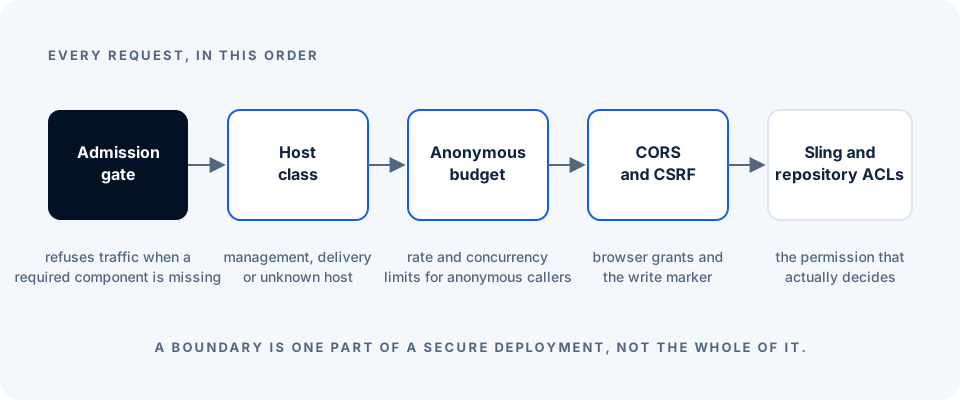
The gate refuses traffic when required boundary components are missing. Its hardened profile also refuses component-reported production blockers.

SECURITY & OPERATIONS
A guarded request boundary is one part of a secure deployment—not a substitute for credentials, network controls and an assembly reviewed for its environment.
The gate refuses traffic when required boundary components are missing. Its hardened profile also refuses component-reported production blockers.
CORS governs browser cross-origin grants; it is not authorization. CSRF controls protect writes that can carry browser-replayed credentials.
Rate and concurrency limits bound uncredentialed requests. This is an abuse boundary, not a substitute for identity or application permissions.
Generic node serialization is refused to anonymous callers, while intentionally rendered pages and real files can remain readable.
Typed API operations use the caller’s resolver. A public DTO must be intentionally shaped for publication, not copied from a management response.
File-drop channels can install running code. The documented hardened lock refuses traffic while the file installer is active; it does not disable that installer.
OPERATOR CHECKLIST
Configure the administrator credential and review the CORS allowlist. Keep credentials and signing secrets out of feature files, logs and examples.
Constrain the origin listener, terminate TLS and validate proxy-header handling for the selected deployment. A localhost URL is not proof of a loopback-only listener.
Review console access, JCR installation and file installation in the actual aggregate. Rebuild and boot-test dependency changes; dropping a feature is not automatically a safe assembly.
The gate only reports what its components can observe. Test access policy, service identities, backups, restore, monitoring and the organization’s patch process separately.
The documented /health/live route remains available when the admission gate is closed. That helps an operator distinguish a running process that deliberately refuses traffic from a process that is no longer responsive. It is not a statement that every service is ready.
A verified private reporting route has not been published yet. The project owner must publish and test that route before launch. Do not post exploit details, credentials or sensitive deployment information to a public issue. This page does not claim a response-time commitment.
Start with the documented architecture and the boundaries of the selected release.